- Organisational vision
Strategy between desire and dread
Are we disappointed with the outcomes of our strategic efforts because we ask too much of our strategies?
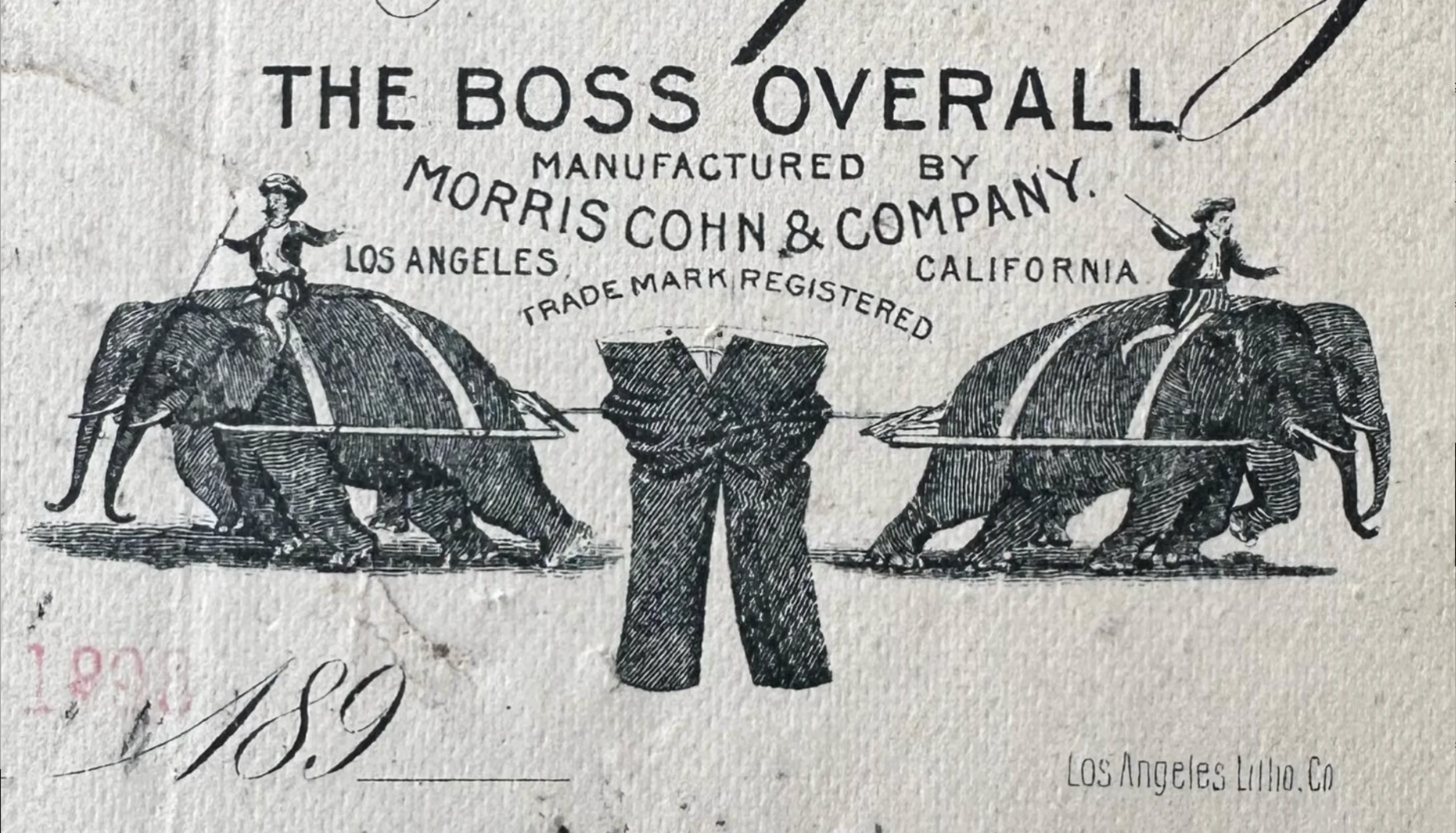
The difficulty of matching aspirations and capabilities
At the top of Weft’s landing page is a carousel of statements about existing strategies that we have overheard in our work with clients. These expressions of suspicion, confusion, and frustration helped point us to where our help was most needed. But before leaping to recount how we resolved specific pain points, it seems worthwhile to reflect on a more general question: is the source of so much disappointment with strategy because we are asking too much of it?
John Lewis Gaddis provided a succinct definition of grand strategy as "the alignment of potentially unlimited aspirations with necessarily limited capabilities."[1] While respecting the differences between states and corporations, we can extend this statement to both: in politics and business, strategy is about matching aspirations to capabilities or, more simply, ends to means. But it is Gaddis's qualifiers that can suggest why this matching almost never runs as smoothly as we would like.
Gaddis interpolates two opposing pairs when he compares the ‘potentially unlimited’ to the ‘necessarily limited’. When contrasting, we usually pair ‘potential’ with its opposite ‘actual’ and ‘necessary’ with its opposite ‘contingent’. By pairing and opposing the 'potentially unlimited' with the ‘necessarily limited’, I propose that Gaddis hints at a knot at the centre of our strategy making. This knot exists because our human ends belong to what is potential, experienced as the imaginable, while our human means belong to what is actual, experienced as the inevitable. And it proves wildly difficult to align these two experiences within any group’s deliberations.
When we are making a strategy, at some point we must articulate the future we desire. Yet faced with our desire as a question, we can find ourselves stalling on one hand or hallucinating on the other. If we cannot specify our desires (because we do not know them or because this makes us vulnerable) we soon find ourselves drawing a blank when asked to name what we want. Yet, assuming we can specify them, they all too quickly pile up as we set about announcing a world that is ever more pristine, more vital—in a word, more perfect—than anything we have experienced before.
Thus, we struggle to name our future because we struggle to set limits on our desires; we always seem to want too little or too much.
This sense of always being a little off balance should be expected of beings who entertain 'potentially unlimited aspirations'. But, making matters even more complicated, even when we get this far, we still need to align our ends with our means.
An economist writing on scarcity or a designer speaking on feasibility describe the same basic point: our means are limited and so we cannot do everything we want. There are not enough resources, or our technologies are not yet mature. This disproportion is why it is essential in strategy to make choices, not only about our 'aspiration' and 'where we will play' but also about 'how we will win' and the 'capabilities and systems' we will need to do so.[2]
Yet when Gaddis speaks of 'necessarily limited capabilities', it is not just the appearance of constraints so much as the necessity expressed by these constraints that stings us. To experience something as necessary is to experience it as unable to be other than it is. Now when Dave Graeber asserted that "the ultimate hidden truth of the world is that it is something that we make and could just as easily make differently"[3] his judgment was sound. Yet the implied corollary is that the ultimate plain truth of the world is that it is something that resists our making, disturbs our ease, and nullifies our difference.
This insight, that the world resists changes to it, speaks to one of our most basic concerns as humans and makers of strategies. While necessity is usually framed in relation to our means, showing us to be finite, it can rebound onto our ends, showing us to be fated. We set out to imagine a bold future and our hearts surge; we move to consider what to do to realise it and our hearts falter. Not so much because we do not have means but because the world as status quo seems to be impervious to all of them. We are undercut by dread, an inner voice whispering over and over 'what even is the point?' A voice that leaves implied that the world will never accommodate the scale of change we seek.
Can anything be done? We cannot sever this knot at the centre of our strategy making because the experience of desire and dread are basic to our species being and, by extension, all our efforts to modify the world. We desire a better world haphazardly. We dread an indifferent world constantly. Yet the practice of strategy changes when we accept these phenomena as part and parcel of the work—when desire and dread become integral to strategy making. The next few posts will explore in more detail how this might be accomplished.
[1] John Lewis Gaddis, On Grand Strategy, (London: Penguin), p.21.
[2] Roger Martin, Playing to Win, (Cambridge MA: HBR Press, 2013).
[3] David Graeber, The Ultimate Hidden Truth of the World, (London: Allen Lane), p.ix.